
Good leaders must first become good servants.
Robert Greenleaf
Therefore, whoever takes the lowly position of this child is the greatest in
the kingdom of heaven.
Matthew 18:4
When you first became a leader, did you ever wonder what God had in store for you? As an emerging leader, do you ever wonder if you are destined to be the next influential leader of your country or the world? The next Rick Warren, Joyce Meyer, Billy Graham—all leaders whom God has used to impact his church in a powerful and very public way?
What is servant leadership?
Robert Greenleaf describes a servant leader as a person who models leadership through service. The best example of a servant leader is our Lord and Savior, Jesus Christ (Matthew 20:25-28; Mark 10:41-45; John 13:1-17). Thus, to study servant leadership, we should study the life of Jesus. Our Savior instructs us as he did his core leadership team (the disciples) that servant leadership is the humble service of others based on our love for them.
What makes servant leaders different? In Jesus on Leadership, Genes Wilkes states that servant leaders uphold the following principles:
- Humility
Servant leaders humble themselves and wait for God to exalt them (Luke 14:7-11; Philippians 2:5-11). By example, Jesus taught humility. The final distinction will come from God. Leaders without Jesus as their Master can only be self-serving. Pride is the enemy of servant leadership. - Follow Jesus
Servant leaders follow Jesus rather than seek a position (Mark 10:32-40). Servant leadership is not about position and power. Servant leaders follow Jesus as he serves others and suffers on their behalf. You are great when you serve. You are first when you are a slave. - Service
Servant leaders give up personal rights to find greatness in service to others (Mark 10: 41-45. When you make Jesus the Lord of your life, you become a servant to others. To lead in the kingdom of God is to serve others and to follow the King. - Risk
Servant leaders can risk serving others because they trust that God is in control of their lives (John 13:3). Jesus knew who was in control of his life and ministry—God, the Father. The secret in risking servant leadership is the assurance that God is in control of your life. Any follower of Christ who seeks to lead like Jesus must be willing to be treated like Jesus—some will follow while others may throw stones! - Meeting needs
Servant leaders take up Jesus’ towel of servanthood to meet the needs of others. (John 13:4-10). Your greatest test of leadership may be to wash the feet of those you know will soon betray you. If you are not wearing a servant’s towel, kneeling at the feet of others, you are in the wrong place. - Delegate
Servant leaders share their responsibility and authority with others to meet a greater need. Are you big enough and secure enough in God to be able to do this? (Acts 6:1-6). The apostles delegated authority so that the seven could satisfy the needs of the church. Jesus delegated authority to his disciples to satisfy the greatest need—to evangelize the world!
Servant leaders know that they are more efficient when they share the ministry with others, and work with them.
As a result of sharing leadership, the following benefits accrue.
a) Less stress on the leader
b) Satisfied followers
c) More ministry opens up
d) Leaders become more focused
e) Greater level of growth and caring
Leaders serve by empowering others to lead with them.
- Multiply
Servant leaders multiply their leadership by empowering others to lead (Exodus 18:17-23). When leaders try to lead by themselves, they burnout and discourage those around them. Being responsible for a task does NOT mean that you have to do it alone. Jesus multiplied his leadership by the power of the Holy Spirit in his followers.
PAUSE
- Which of the seven (7) servant leadership principles is a challenge to you in your journeyas a servant leader?
- What measures can you put in place to ensureyou keeping growing as a servant leader?
What servant leadership is not
There are some misconceptions about servant leadership:
- Doing ministry for others
Christian Ministry should not be left to the pastor alone. Pastors are responsible for ministry, but primary thrust of that ministry is to equip lay people for service. Paul instructs that the entire congregation is responsible to use their gifts to minister and train others and to be trained by them. Consequently, servant leaders don’t rob their people of the privilege of doing ministry. Instead, they equip and encourage them to minister and train others.
- Being passive
A typical misunderstanding of servants is that they must wait for their master to direct their service. Servant leaders are proactive risk takers. You won’t find them standing around, waiting for orders. The reason is that the Master has already issued those orders as recorded in the Scriptures more than two thousand years ago. One example of his orders is the Great Commission. Jesus instructed his church to “Go and make disciples.” (Matthew 28:19). This is a standing order for Jesus’ church until He returns. We don’t have to ask or wait for him to show us his will in this. The idea is that we must proactively pursue God’s purpose in spite of the risks. Wise servant leaders are proactive risk takers. - Focusing on weaknesses
Since many people consider servants to be subordinates, dependent, and completely at the disposal of their master, it’s natural that they would view servants as weak. Servant leaders today must wrestle with their human frailty. Leading a church in the late twentieth century and the early twenty-first century has proved to be a leadership-intensive experience. Due to ethical and moral failure on the part of far too many leaders, the congregants neither trust nor respect their leaders, as did previous generations. It is imperative that we do not view other leaders or ourselves strictly in light of our weakness, but in the light of Christ’s potential strength in our lives. Focusing exclusively on weaknesses is debilitating and leads quickly to discouragement. Focusing on Christ’s strength in our lives in contrast to and in spite of our weaknesses leads to encouragement and hope, even in the most difficult circumstances. - Ignoring our own needs
Paul in Philippians 2:4 writes, “Each of you should look not only to your own interests, but also to the interests of others.” He affirms that each of us has personal interests or needs, and it is legitimate to address those needs. For example, leaders need personal time with God, family, and friends. They also need exercise, rest, and vacations, just like the people in their churches. Failure to address one’s personal needs especially the spiritual and emotional onescan be disastrous in the long term.
Mark Miller and Ken Blanchard in The Secret observe that a person can serve without leading, but a leader cannot lead well without serving. They propose five key ways leaders SERVE through their ongoing actions:
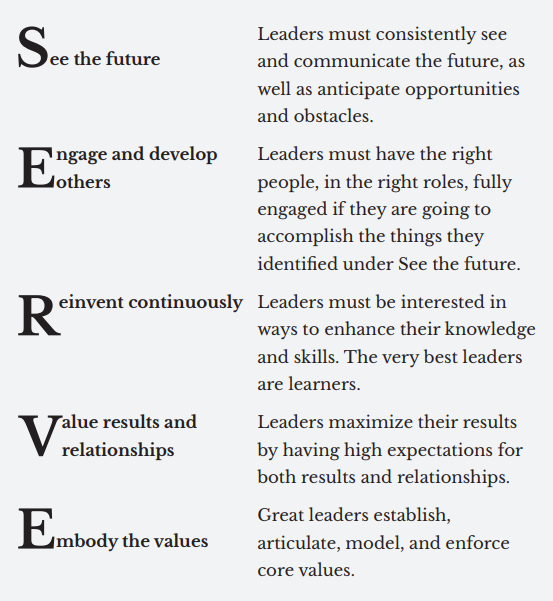
By combining what servant leadership is and isn’t, we now have a full-orbed picture of the kind of servanthood that is indicative of a servant leader. From this perspective we can see that it’s not wrong to pursue greatness as a Christian leader. The key, of course, is to understand that the road to true greatness is servanthood.
REFLECTION AND APPLICATION
- What image comes to mind when you hear the term servant leader?
- Do you agree that Christian leadership is servant leadership? If yes, why? If no, why not?
- What is your definition of servant leadership? How would you support your definition from the Bible?
- What are some common expectations that congregations place on their pastors and leaders that are misconceptions of servant leadership? Is this a problem in your leadership situation? If so, what can you do about it?
EVALUATION AND ACTION
- Do you know any servant leaders? If so, who are they? How has their servanthood affected you as a follower or leader?
- Read and discuss 1 Thessalonians 5 and 2 Thessalonians 3.